Understanding the smart city idea in the Indian context
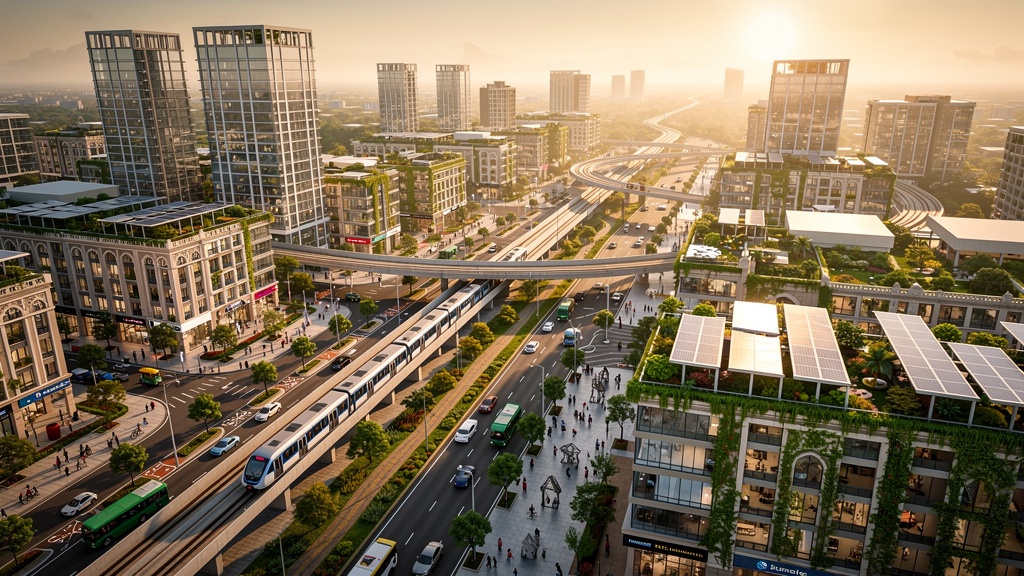
Smart cities in India occupy a unique position in the global urban conversation. Unlike a purely technology-first model, the Indian smart city approach has gradually taken shape at the intersection of infrastructure deficits, rapid migration, climate pressure, governance complexity, and the rising expectations of citizens who want reliable services and better quality of life. In practice, that means a smart city in India is not simply a city with sensors or connected cameras. It is a city that uses planning, data, and institutional coordination to deliver outcomes that matter: safer streets, more dependable public transport, cleaner air, efficient waste systems, transparent service delivery, greener neighborhoods, and public spaces that work for more people. The term “smart” has sometimes been misunderstood as a synonym for expensive, futuristic, or overly technocratic urban development. Yet the most meaningful smart city interventions often look surprisingly practical. They may include integrated command and control centers, digitized grievance systems, smart metering, adaptive traffic signaling, GIS-based planning tools, rooftop solar adoption, water leak detection, intelligent streetlighting, or integrated mobility platforms. These systems matter because they help city governments use limited resources more effectively while expanding service quality.
India’s urban transition is taking place at a scale few countries have experienced in such a compressed timeframe. Cities must absorb population growth, diversify economic activity, modernize legacy infrastructure, and prepare for climate volatility at once. This pressure creates a compelling case for smarter urban management. The relevance of smart cities in India is therefore rooted in necessity as much as ambition. Administrators need real-time visibility into service delivery. Residents need easier access to civic systems without standing in multiple queues. Transport agencies need better synchronization between metro, bus, paratransit, walking, and cycling networks. Utilities need more efficient maintenance, theft reduction, and demand forecasting. Urban planners need accurate land-use data and better monitoring tools. Businesses need predictable infrastructure and digital ecosystems. Citizens need reassurance that modernization will be inclusive, not exclusionary. Because of this, Indian smart city development tends to involve a blend of hard infrastructure, digital systems, governance redesign, and area-based improvements that can be expanded over time.
One of the strongest features of the smart city discourse in India is its potential to connect urban modernization with service justice. When implemented thoughtfully, digital systems can reduce friction for ordinary people. A resident can track a complaint online instead of repeatedly visiting a municipal office. A commuter can access information about route integration. A city can detect failures earlier in water distribution. A hospital network can coordinate emergency response more efficiently. A public plaza can become safer through better lighting and universal design. These improvements are not glamorous in the way futuristic renderings often are, but they have far greater social value. The promise of smart cities in India, then, is not to create abstract model cities detached from reality. It is to help existing and emerging urban centers become more liveable, more responsive, and more resilient in everyday ways.
Why smart urban development matters now more than ever
The urgency of urban modernization in India stems from multiple trends converging simultaneously. The first is demographic scale. Urban populations continue to grow, placing enormous pressure on roads, utilities, housing, public transport, and environmental resources. The second is climate stress. Heat waves, intense rainfall, water scarcity, flooding, and air pollution have made it impossible to treat environmental resilience as an optional concern. The third is economic competitiveness. Cities are increasingly seen as platforms for investment, innovation, manufacturing, services, logistics, and entrepreneurship. The fourth is digital expectation. Citizens now assume that at least some public services should be accessible through mobile-first, transparent interfaces. The fifth is administrative complexity. Urban governance in India often involves multiple agencies working across overlapping jurisdictions, and without digital integration this fragmentation can delay action and reduce accountability.
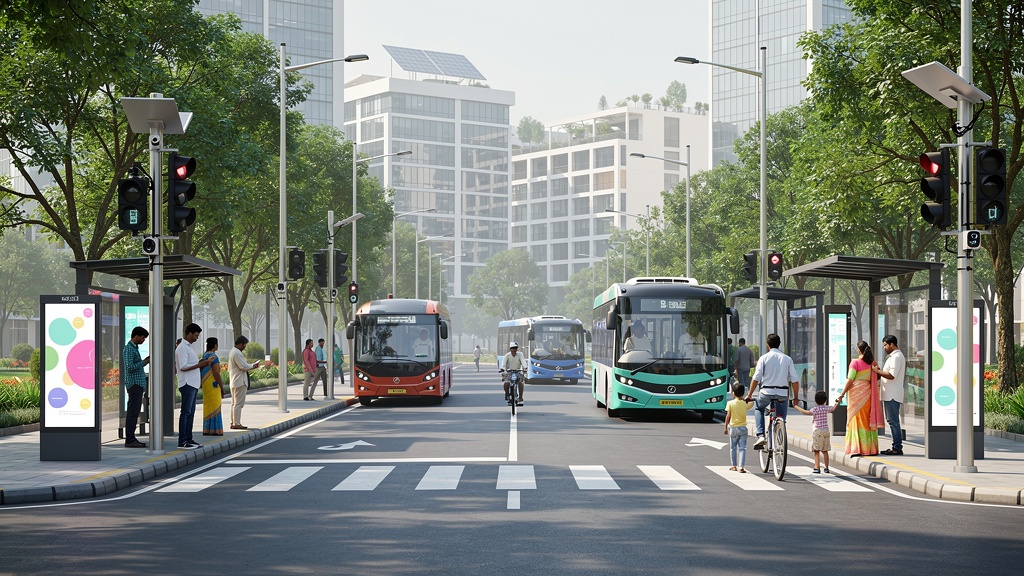
Smart city strategies respond to these pressures by improving visibility, coordination, and responsiveness. If a city government can monitor traffic bottlenecks, water supply variation, waste collection patterns, and service complaints through integrated platforms, it can prioritize interventions with greater confidence. If a city can digitize records, geospatial data, building permissions, and project monitoring, it can reduce delays and improve planning quality. If public lighting becomes energy efficient and remotely managed, cities can lower costs while enhancing safety. If mobility systems become integrated, citizens can shift away from private vehicle dependence. If urban design becomes more human-centered, commercial growth can coexist with better public life. These are practical benefits that compound over time.
Another reason smart cities in India matter is because they can create better decision-making cultures. Urban systems are often managed reactively, with agencies addressing crises only after they intensify. A smarter city uses data and process redesign to become more anticipatory. For example, predictive maintenance for utility networks can reduce service disruptions. Flood-prone zones can be monitored more effectively through geospatial analysis and drainage mapping. Public health teams can use dashboards to track outbreaks or service demand. Traffic control rooms can respond to disruptions dynamically. These capabilities do not solve every urban problem on their own, but they improve the state’s ability to act in time. Over the long term, this shift from reactive administration to informed governance can be one of the most valuable legacies of smart city investment.
The building blocks of a smart city ecosystem
Although every city has different priorities, most smart city frameworks in India rely on a common set of building blocks. The first is digital infrastructure. This includes command centers, fiber connectivity, sensor networks, GIS platforms, data integration tools, mobile service interfaces, and monitoring systems. The second is physical infrastructure modernization. Roads, walkways, drainage, public transport facilities, electrical networks, waste systems, water treatment, and public amenities often need foundational upgrades before advanced digital tools can achieve meaningful results. The third is institutional coordination. Technology does not work if agencies cannot share information, define responsibilities, or sustain maintenance. The fourth is citizen interface. Smart systems should not remain invisible back-end tools alone; they must improve how people experience services. The fifth is sustainability. Cities cannot claim intelligence if they ignore energy efficiency, water security, ecological restoration, and heat resilience. The sixth is inclusion. Smart urban development must address the needs of informal workers, elderly residents, children, women, persons with disabilities, and low-income communities instead of benefiting only high-visibility districts.
These building blocks are interdependent. Consider water management. A city may use sensors and SCADA systems to monitor supply, but without pipe rehabilitation, billing reform, maintenance staff, and citizen communication, digital monitoring will have limited value. Or consider mobility. An app can provide multimodal travel information, but its value depends on service reliability, walkable access, safe interchanges, and institutional collaboration between transport operators. Similarly, a command center may provide a real-time operational picture, but it only becomes effective when supported by standard operating procedures, trained staff, and an escalation framework. Smart city success, therefore, is less about isolated pilot projects and more about integration. The cities that gain the most are often those that treat technology as one tool within a broader governance and infrastructure strategy.
The smartest cities are not the ones with the most visible hardware. They are the ones that make urban life easier, safer, and fairer without adding unnecessary complexity for citizens.
Area-based development and citywide improvement
A recurring theme in India’s smart city journey has been the relationship between flagship districts and citywide reforms. Demonstration corridors, redeveloped precincts, waterfronts, heritage zones, or business districts can showcase what better urban design and coordinated investment look like. These spaces often feature upgraded roads, underground utilities, public Wi-Fi, smart poles, landscaping, signage, and better pedestrian infrastructure. Such improvements can build public confidence and attract attention. However, the broader success of smart cities in India depends on how effectively lessons from these zones are scaled across the city. Residents judge urban transformation not only by curated central areas, but also by the consistency of drainage, lighting, waste collection, bus reliability, health access, and neighborhood-level maintenance in less visible parts of the city.
That is why citywide systems are crucial. A smart city needs integrated traffic management beyond a single boulevard. It needs municipal platforms that can serve many wards, not one district. It needs environmental monitoring that reflects real urban conditions, not only showcase zones. It needs service data that can reveal inequality between neighborhoods. It needs planning tools that support expansion as cities grow. The long-term opportunity for India lies in using focused investments to develop standards, workflows, and proof points that can later be expanded. This is more demanding than one-time beautification, but also more meaningful. When area-based development is linked to citywide governance reform, smart city investment gains strategic value.
Dholera as an example of planned smart city ambition in India
Dholera is often cited in discussions about smart cities in India because it represents a different model from retrofitting an already dense and historically layered city. Located in Gujarat and planned as part of a larger industrial and economic corridor strategy, Dholera has been positioned as a future-oriented urban development zone designed with infrastructure, logistics, industrial growth, and digital systems in mind from the ground up. This makes it significant in the Indian context. While many smart city projects focus on upgrading existing urban systems, Dholera demonstrates what it looks like when planners attempt to embed smart infrastructure into the original development framework rather than add it later. Roads, utility corridors, stormwater systems, district planning, land pooling logic, and infrastructure phasing can be coordinated more systematically in such a model.
What makes Dholera notable is not simply its scale or branding, but the way it illustrates several principles associated with smart city success. First, it emphasizes trunk infrastructure early, which is often where Indian urban development struggles when growth outruns public investment. Second, it highlights the value of integrated planning in which transport networks, industrial areas, residential zones, utility services, and public facilities are not treated as disconnected projects. Third, Dholera has drawn attention because of its aspiration to combine economic development with next-generation urban systems such as intelligent utilities, digital monitoring, more structured right-of-way planning, and climate-aware infrastructure design. Even for observers who remain cautious about long-term execution, it offers a useful case study in how India is experimenting with large-scale planned urbanization.
Dholera is also important because it broadens the conversation about what success in smart urbanism can mean. In established cities, success may be measured by how well governments retrofit and improve existing infrastructure. In Dholera’s case, success is more closely tied to whether a new city can avoid repeating legacy problems from the outset. That includes planning sufficient infrastructure capacity, integrating land use and mobility, enabling utility management through modern systems, reserving space for public services, and creating a framework attractive to both industry and residents. If these elements mature effectively over time, Dholera can serve as a reference point for how India might build future-ready urban districts with stronger infrastructure logic and better long-term service planning.
At the same time, Dholera offers an important reminder that smart city success must ultimately be tested by lived outcomes. A planned city can have wide roads, mapped utilities, and advanced infrastructure architecture, but it still needs vibrant economic activity, social infrastructure, environmental responsiveness, and everyday usability. The real lesson from Dholera is therefore twofold: ambitious planning matters, and execution matters even more. For this website, Dholera stands as a valuable example because it shows the scale of India’s smart city ambition and the seriousness with which integrated planning, infrastructure readiness, and future-focused governance are being discussed. It is one of the clearest examples of how the smart city idea in India extends beyond upgrading old systems and also includes building new urban models designed for long-term resilience and growth.
What citizens, businesses, and planners can learn from this website
This website is structured to provide a deep and practical understanding of the smart city landscape in India. The next pages explore technology and governance systems, sustainable infrastructure priorities, mobility and transport integration, and the future of citizen services. Together, these topics show that smart cities in India are best understood as evolving urban ecosystems rather than finished products. A city may be advanced in mobility but still improving water systems. Another may have strong command-center operations but need more progress in inclusion. A third may excel at green public infrastructure but still struggle with inter-agency integration. Such variation is natural, because cities differ in geography, economy, administrative capacity, and historical growth patterns.
For developers, planners, policy analysts, educators, and informed citizens, a nuanced understanding matters. It helps avoid simplistic assumptions that smart cities are either revolutionary successes or empty branding exercises. The truth is more layered. Smart cities in India include both inspiring progress and difficult lessons. They reveal how technology can support governance, but also how institutions must adapt. They show that sustainability cannot be detached from economic realities. They demonstrate that public trust is built through service quality, not slogans. They remind us that the future of Indian urbanism will depend on whether modernization remains accountable, inclusive, and environmentally grounded. If that happens, smart cities can become not just infrastructure programs, but models for better urban citizenship.
As you continue through the site, keep one question in mind: what does a smarter city actually feel like for the people who live there? The answer is likely to include reduced friction, greater safety, quicker access to services, more reliable public systems, cleaner surroundings, and a stronger sense that the city belongs to its residents. That human outcome is the real standard against which any smart city in India should be measured.