Why citizen experience is the real test of a smart city
The strongest argument for smart cities in India is not technological sophistication by itself, but the possibility of making urban life more dependable and humane. A city becomes meaningfully smart when residents can access services more easily, travel with less stress, use public spaces with more comfort, receive better information, and feel that institutions respond more effectively to their needs. This citizen-centered standard matters because urban transformation can otherwise drift into a narrow emphasis on hardware and control systems. Those investments may be useful, but they only gain legitimacy when they create public value.
Citizen experience is not a vague concept. It includes how long it takes to resolve a complaint, whether public facilities are accessible, whether healthcare and emergency systems are coordinated, whether educational and community spaces are modernized, whether digital services are understandable, whether women feel safer in public spaces, whether older adults can navigate streets, whether people in underserved settlements benefit from upgrades, and whether residents receive clear communication during disruptions. In other words, the human side of smart city development is extensive. It stretches from municipal workflows to social infrastructure.
Indian cities are diverse in language, income, literacy, digital access, and settlement pattern. Because of this, citizen-centered smart development must be flexible. A one-size-fits-all platform or design language is unlikely to work everywhere. What matters is the principle: use technology, planning, and institutional reform to reduce friction and expand capability for the widest possible range of people. This principle is likely to shape the next stage of smart city discourse in India as attention shifts from pilot projects to long-term urban systems.
Digital inclusion and access to public services
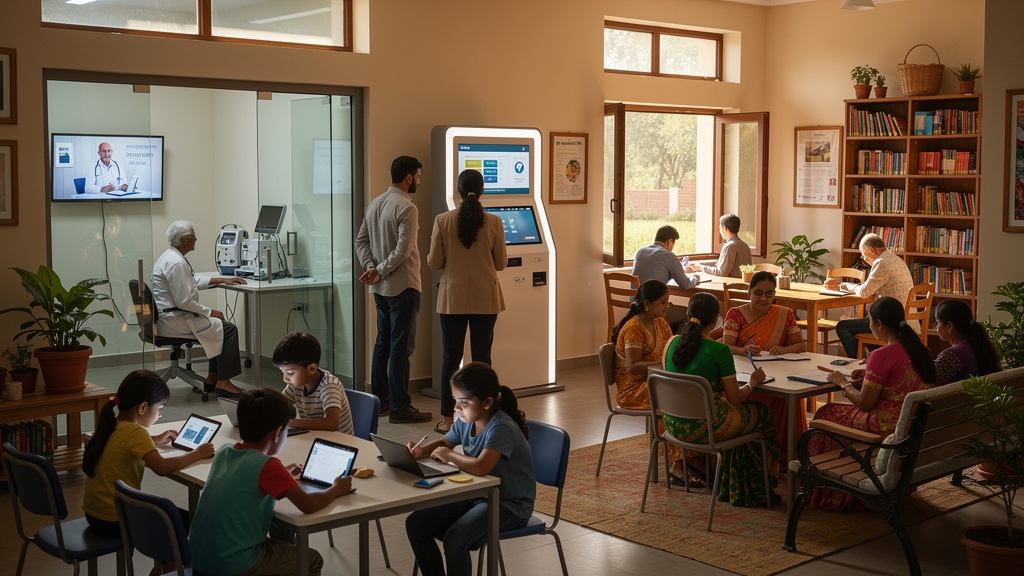
As urban services become more digitized, inclusion becomes both a technical and social priority. It is easy to assume that online portals and mobile apps automatically improve access, but digitalization can exclude people if interfaces are confusing, language options are limited, documentation requirements are rigid, or service delivery depends too heavily on uninterrupted internet access. For smart cities in India, digital inclusion means designing systems that work across different levels of literacy, device access, and user confidence. It also means preserving assisted service channels through help desks, kiosks, call centers, ward offices, or community intermediaries.
Inclusive digital public service design should aim for clarity, minimal friction, transparent status updates, and straightforward escalation. Services related to certificates, utility payments, permits, grievance reporting, health appointments, welfare access, and local information all benefit when digital workflows are paired with human support. The goal is not to replace every physical interface, but to reduce unnecessary burdens. In many Indian cities, hybrid service models may remain the most effective because they accommodate a wider range of users while still improving efficiency.
There is also an opportunity to rethink public digital infrastructure beyond individual transactions. Community internet access points, digital literacy initiatives, neighborhood information hubs, and mobile-first service awareness campaigns can broaden the benefits of smart city platforms. This matters because technology adoption is never only about software availability; it is also about trust, habit, language, and social support. Cities that invest in these enabling layers are more likely to see digital services used meaningfully over time.
Health, education, and neighborhood-level social infrastructure
Smart city development often emphasizes roads, sensors, surveillance, and utilities, yet social infrastructure is equally important to urban quality. Health and education systems are central to whether cities feel capable, equitable, and future-ready. Smart public health infrastructure can involve better emergency coordination, telemedicine support in local facilities, digital records, supply monitoring, outbreak dashboards, and integrated response systems. These tools can improve resilience and reduce delays, especially during crises. However, the technology layer should support care delivery, not overshadow it. Staff capacity, facility quality, and local accessibility remain fundamental.
Education and learning infrastructure are similarly important. Public libraries, community learning centers, digital classrooms, skill development hubs, and neighborhood innovation spaces can all contribute to a more inclusive smart city ecosystem. In India’s urban context, such facilities can help bridge inequality by expanding access to knowledge and opportunity. They can also anchor community life in ways that purely commercial development does not. A city with digital kiosks but weak community infrastructure may appear modern without being socially robust. Conversely, a city that integrates technology into schools, libraries, and public learning spaces builds deeper long-term capacity.
Neighborhood-level thinking is especially valuable here. Not every service needs to be concentrated in central districts. Distributed community infrastructure can reduce travel burdens and support more balanced urban access. This is relevant for women, elderly residents, caregivers, children, and workers with limited time flexibility. Smart city planning becomes more humane when it notices where daily life actually happens.
Safety, accessibility, and public confidence
Public confidence in the city is shaped strongly by whether people feel safe and whether urban spaces accommodate varied abilities and life stages. Safety in a smart city is not just about surveillance. It also involves lighting, visibility, active streets, emergency communication, inclusive transport design, maintenance, and institutional responsiveness. Women’s safety in particular is influenced by route continuity, last-mile options, crowdedness patterns, and the reliability of support systems. A city that invests in cameras but leaves station exits dark or footpaths obstructed has not solved the actual problem.
Accessibility is another crucial area. Persons with disabilities, older adults, and people with temporary mobility constraints often experience the city very differently from planners. Smart cities in India should integrate universal design across transport, public buildings, digital services, signage, and streetscapes. Accessibility should not be treated as a specialized add-on. It is a core quality indicator of whether public systems are built for all. Technology can help through audio support, assistive navigation, digital feedback tools, and better information systems, but physical design remains indispensable.
Public confidence grows when cities feel understandable. Wayfinding, intuitive public interfaces, visible maintenance, emergency readiness, and predictable services all contribute to a sense that the city is working. This emotional dimension is often underestimated, yet it affects how people perceive governance and belonging. A smarter city is not only more efficient; it is more legible and less exhausting to navigate.
Economic opportunity, local enterprise, and urban innovation
Smart city development is often linked to investment and innovation, but its broader economic value lies in how it supports everyday enterprise. Better streets increase footfall for local businesses. Reliable electricity and digital systems support small firms. Efficient logistics help markets function. Easier permits can reduce informal barriers. Public Wi-Fi zones, co-working hubs, and startup ecosystems may contribute to growth in some districts, but they should not distract from the economic importance of ordinary urban productivity. Indian cities depend heavily on mixed, layered local economies where formal and informal activities coexist.
A citizen-centered smart city should therefore support local enterprise as part of its design. This means considering vending zones, market access, delivery routes, digital payments, transport connectivity, safety, and public space quality. Smart urbanism becomes more socially grounded when it recognizes that a city’s intelligence includes how well it supports livelihoods. Large-scale technology platforms matter, but so does the ability of a street market, neighborhood workshop, or local service business to operate in a safer, cleaner, better-connected environment.
Innovation ecosystems also deserve attention. Universities, incubators, startups, research institutions, civic-tech groups, and design communities can contribute ideas and solutions to urban problems. Some of the most meaningful future advances in Indian smart cities may come from local innovation adapted to specific conditions rather than imported templates. Cities that create space for experimentation, feedback, and collaborative problem-solving may prove more adaptable over time.
The future of smart cities in India: from projects to urban culture
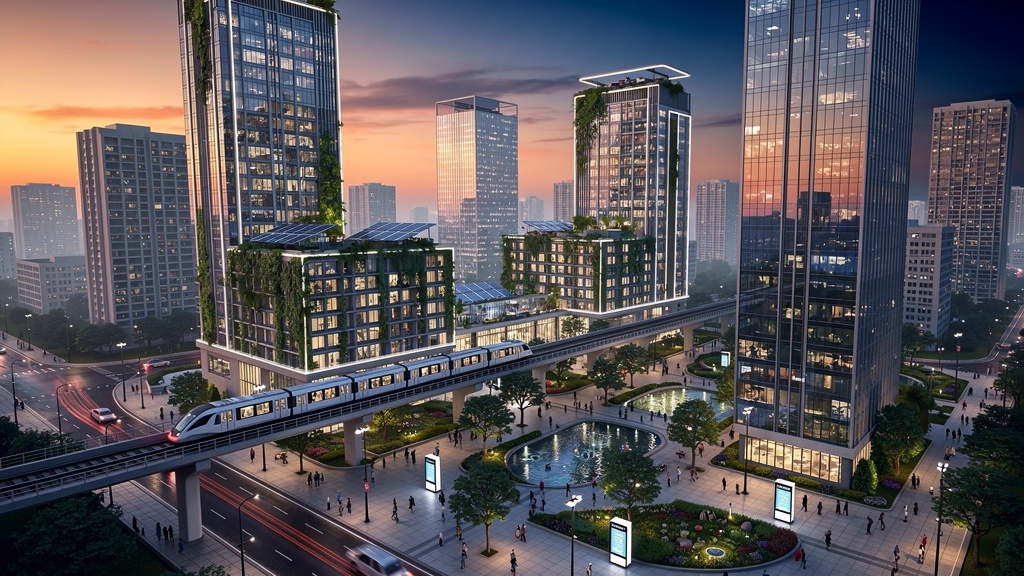
The future outlook for smart cities in India is likely to involve a shift from isolated projects toward a deeper urban culture of coordination, measurement, and improvement. In the early phases of smart city development, visible projects often attract the most attention. Over time, however, the more enduring gains will come from institutions that learn, update systems, respond to evidence, and maintain infrastructure consistently. The next generation of Indian smart cities may place more emphasis on platform integration, climate adaptation, neighborhood services, resilient public health systems, and urban design that supports comfort and inclusion.
Artificial intelligence, automation, advanced analytics, and digital twins may play larger roles in urban operations, but their public value will still depend on governance quality. Cities may become more predictive in maintenance, better at modeling risk, and more effective at tailoring service delivery. Yet the same questions will persist: who benefits, who is excluded, how is data governed, and are environmental limits respected? These are not barriers to innovation. They are the conditions under which innovation becomes trustworthy.
Another likely trend is greater convergence between smart city policy and resilience planning. Heat, water stress, air quality, and public health are pushing cities to think beyond efficiency toward survivability and quality of life. This may produce smarter neighborhood cooling strategies, stronger local service nodes, more adaptive transport systems, and better environmental monitoring. If this happens, the future smart city in India may become less about futuristic branding and more about practical resilience that citizens can feel.
What success should look like in the coming decade
Success for smart cities in India over the coming decade should be measured by outcomes that matter to residents. Are services easier to access? Are complaints resolved more reliably? Are public spaces safer and more welcoming? Is transport more connected? Are utilities more dependable? Are environmental conditions improving? Are low-income communities included in the benefits of modernization? Are public systems more transparent? These questions provide a stronger benchmark than counting installations or control rooms.
If Indian cities can answer these questions with evidence and visible progress, the smart city idea will mature into something durable. It will no longer be seen as a limited program category, but as a framework for urban governance that combines technology, sustainability, infrastructure, and social inclusion. This is the most promising future for smart urbanism in India: one where intelligence is not measured by spectacle, but by the city’s ability to care for more people, under more complex conditions, with greater fairness and foresight.
For planners, civic leaders, and urban observers, the lesson is simple. The future of smart cities in India will be won not only in data centers and infrastructure corridors, but in neighborhoods, schools, clinics, station areas, community hubs, and public spaces. That is where residents decide whether urban transformation is real. And that is where the promise of a smarter city must ultimately be fulfilled.